Vipul Enterprises- A Name You Can Trust
Main menu
- Home Page
- Solar Products
-
Strategic Composite Systems
- Bullet Proof
- Riot Control
- Fire and Rescue
- Bomb Blanket
- Tankers And Refuelers
- FRP & Speed Boats
- Post Fence and Metal Angles
- Mobile Communication Towers
- Pre-Fab Shelters
- Clothing
-
Furniture
- File Cabinets, Almira And Trunks
- Tables, Chair And Desk
- Folding Cots
- Specialised Furniure / Hospital Furniture
- About Us
-
FAQ
- Solar Overview
- Solar FAQ
Solar Energy-
Solar energy is all about harnessing the power of the sun to produce energy. The sun rains enough solar energy on the Earth in one day to power the entire energy needs of the world for one year. Solar energy is considered a renewable energy source because it will exist for as long as our sun does, estimated to be another 4.5 billion years. Solar energy is also considered a clean energy because it does not produce pollutants or byproducts harmful to the environment.
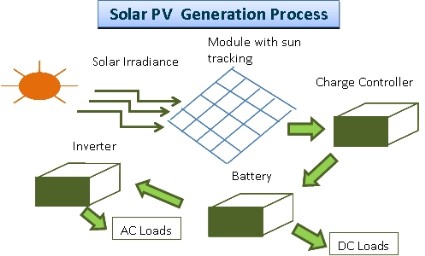
Currently, solar energy is produced primarily through the use of solar cells, also known as photovoltaic cells. The process works by placing the cells in direct sunlight. Sun hits the cells causing a chemical reaction that creates an electric current. The current is then turned into electricity.
Overview of Renewable energy
India is endowed with vast solar energy potential. About 5,000 trillion kWh of solar energy is incident over India’s land area with most parts receiving 4 – 7 kWh per sq m per day (considered ideal for solar power generation). Hence solar energy can be effectively harnessed for generating electricity in most parts of India. As of Oct 2010, installed power generation capacity in India is 165 GW and IEA predicts that by 2020, 327 GW capacities is needed. GOI is targeting 20,000 MW solar power generations by 2022 through JNNSM thereby, offering vast opportunities to corporate to venture into power sector once accessible to selected few.
Solar power projects are new in India there has been a significant growth in their numbers globally. There was about 10,000 MW of installed capacity in 2008 and growing at 19% annually. About 70% of this capacity is in Germany and Spain. However the new policies announced in India, USA and China allows for significant portion of future growth to be in these countries. This increased growth and demand has led to a massive increase in productive capacity and a rapid fall in the prices. The last 4 ?5 years has seen the cost of PV installations come down by almost 50%.
Solar energy received by India in a few minutes is far more than India can consume in the whole year.
Applications of solar power include rural electrification, solar water heaters, solar roof top, solar street lights etc.
Jawaharlal Nehru Solar Mission initiated in Feb 2010 with an objective to deploy 20,000 MW of solar power by 2022.
In budget 2010, central excise duty on solar panels has been waived and LED lights cut to 4% .
There are two efficient and effective ways to use solar energy to generate electricity:
Photovoltaic -
The direct conversion of sunlight to electricity Thermal -
The use of heat to generate electricity
Solar Photovoltaic (PV) is the process of converting sunlight into electricity with the help of a device known as Solar Cell
The 3 major types of Solar PV Technology are – Crystalline, Thin Film and Concentrating
Several social, environmental and economic benefits can be achieved through deployment of solar PV technology
Installed Solar Systems in India |
Quantity |
Solar (on- |
10.28 MWp |
Solar (off- |
2.46 MWp |
SPV Home Lighting |
5,83,429 Nos. |
Solar Latern |
7,92,285 Nos. |
SPV Street Lighting |
88,297 Nos. |
SPV Pumps |
7,334 Nos. |
Solar Water Heating - |
3.53 Mln. Sq.m |
*till March 2010 , Source : MNRE |
|

Advantages Of Solar Energy
Societal Aspect
The impact of use of solar energy on the following aspect:
Income generation
Additional energy availability
Education
Health
Hygiene and sanitation facility
Safety
Quality and standard of living
Extended length of working hour
Social and Communal services etc
Environmental Friendly.
Zero Emission.
Health and Safety.
Cost Effectiveness.
Low Maintenance Cost.
Low Running Cost.
Reliable Energy Source.
Energy Affordability.